
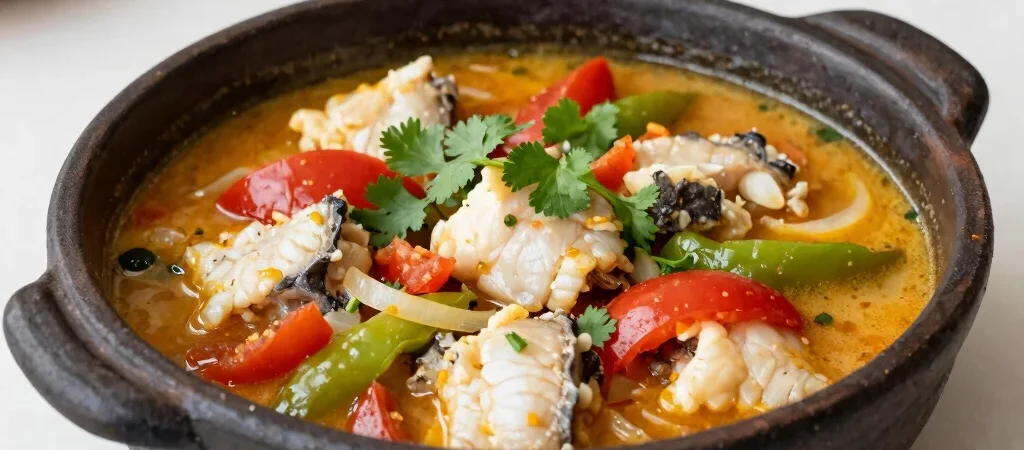
When the lid comes off a moqueca, the first thing you notice should be the smell of onion, tomato, coriander, and coconut milk—not a cloud of steam from an aggressively boiling pot. Gentle heat keeps the fish in tender pieces and gives the sauce time to come together. This Bahian-style version uses dendê oil for its distinctive color and aroma, but the amount can be adjusted to suit your table.
Prepare the fish and vegetables
For four servings, use 700 g firm white fish cut into large chunks, 1 sliced onion, 2 sliced tomatoes, 1 sliced green bell pepper, 2 minced garlic cloves, 400 ml coconut milk, 2 tablespoons dendê oil, the juice of 1 lime, and a handful each of chopped cilantro and scallions. Sea bass, snapper, or another firm fish that holds together in a stew can work. Avoid very thin fillets, which may break apart before the sauce is ready.
Season the fish with lime juice, salt, and black pepper while you slice the vegetables. If dendê oil is hard to find, use a little olive oil for cooking and finish with a small spoonful of red palm oil only if available; the flavor will be different, but the stew can still be satisfying. For less heat, leave out fresh chili or serve it at the table rather than cooking it into the pot.
Let the pot simmer gently
In a wide, heavy pot, warm the dendê oil over medium heat and cook the onion, garlic, tomato, and bell pepper for about five minutes, just until they begin to soften. Nestle the fish pieces among the vegetables and pour in the coconut milk. Bring the liquid to a gentle simmer, cover, and cook for 10–15 minutes, depending on the thickness of the fish.
Resist stirring once the fish is in the pot; gently shake the pan if the sauce needs moving. The fish is ready when it turns opaque and separates easily with a fork. Finish with cilantro and scallions, then taste the broth and adjust the salt and lime. If the sauce boils hard, lower the heat—the goal is tender fish, not a rapidly reduced sauce.
Serve and store the leftovers
Serve moqueca with plain white rice, farofa, or pirão made by whisking some of the hot broth into cassava flour. Rice gives the coconut-and-tomato sauce somewhere to go; farofa adds a dry, toasted contrast. Put lime wedges on the table so everyone can brighten their own serving.
Refrigerate leftovers in a covered container once they have cooled, and use them within two days. Reheat gently on the stovetop with a splash of water or coconut milk, stopping as soon as the fish is hot; repeated boiling can make it fall apart. Can the dish be made ahead? Prepare and slice the vegetables ahead, but cook the fish close to serving time for the best texture.